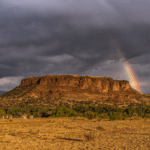
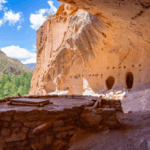
Black Mesa, located on the San Ildefonso Pueblo reservation in New Mexico, is a significant cultural and geographical landmark. It’s a sacred place for the San Ildefonso people, with the Pueblo’s history deeply intertwined with the mesa. The mesa itself is a volcanic outcropping rising above the Rio Grande Valley.
An Historical Account From Archaeology.org
Exploring the legacy of the New World’s most successful native rebellion. The Pueblo Revolt of 1680 saw the San Ildefonso people retreat to Black Mesa during the Spanish reconquest. A natural fortress, Black Mesa was the scene of dramatic events in 1694, when Pueblo warriors encamped on its summit withstood a months-long Spanish siege.
That conflict was the culmination of what is known today as the Pueblo Revolt, an indigenous uprising that began on August 10, 1680. On that date, Pueblo warriors from 19 separate villages carried out a coordinated attack on Spanish missionaries and colonists across New Mexico.
Within a few days, they had driven virtually all Spaniards out of the province. For the next decade, apart from occasional Spanish military expeditions, the Native American peoples of New Mexico enjoyed total independence. “The Revolt period is still so important to Pueblo identity,” says University of Pennsylvania archaeologist Joseph Aguilar, a member of San Ildefonso Pueblo. “In many ways it shaped the world we live in today.”